
Persistent Core Inflation, Elevated Rates Volatility, and an Incomplete Easing Narrative
Current data suggest a restrictive but not yet systemic macro-financial backdrop

Observable facts
Recent data continue to indicate that underlying inflation remains persistent, even though inflation expectations further out the curve appear relatively contained. At the same time, Treasury market volatility remains elevated, and recent activity data suggest that the industrial cycle has improved at the margin rather than collapsed.
Specifically:
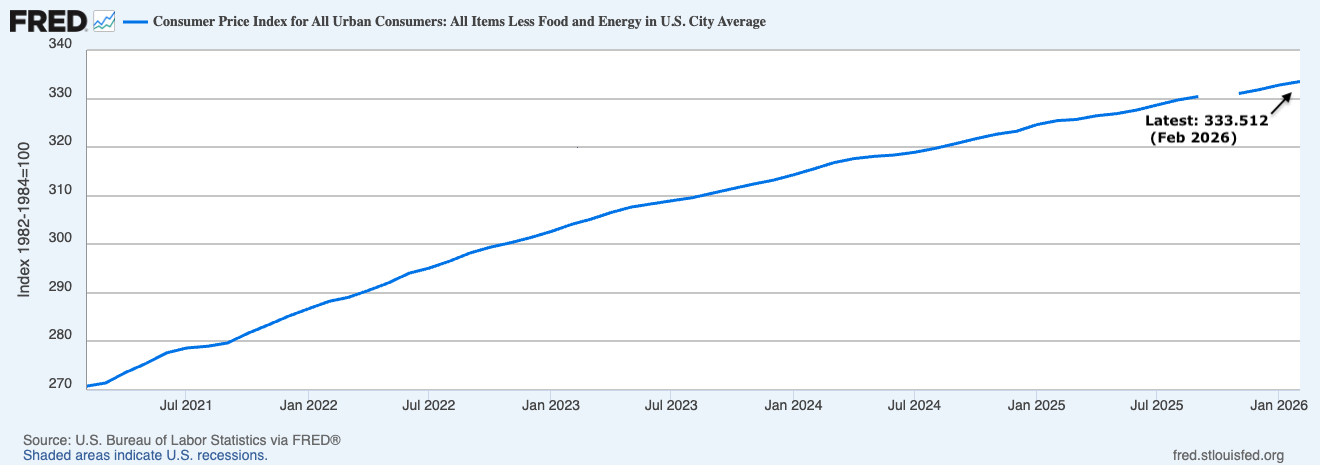
Core CPI continues to rise in level, which is consistent with ongoing underlying price persistence rather than a clean disinflationary resolution.
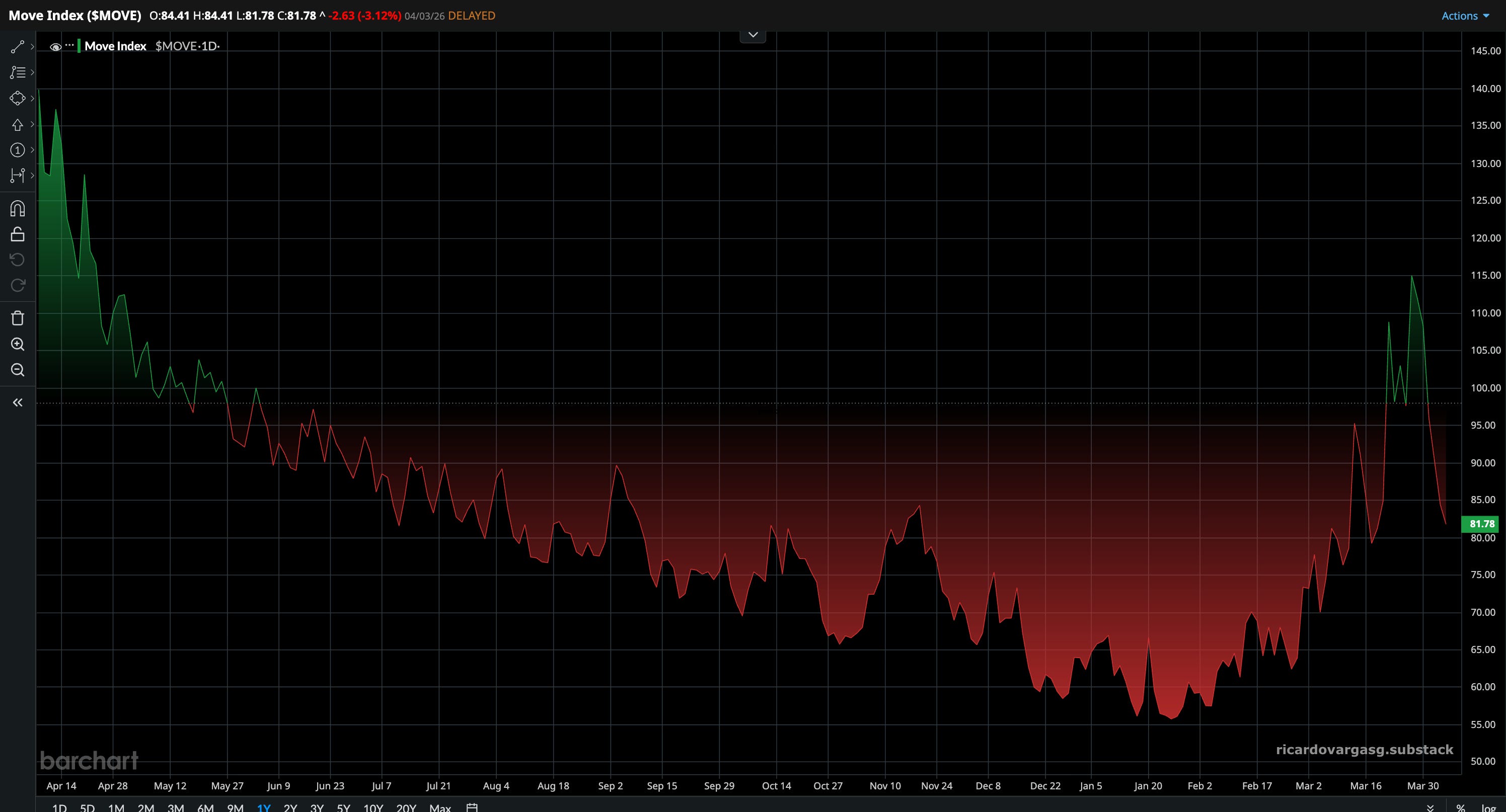
The MOVE Index remains elevated relative to its recent calm range, indicating that the rates market is still operating with materially higher uncertainty than in the more stable phase seen late last year.
ISM Manufacturing PMI has moved back into expansion territory, while subcomponents such as New Orders and Backlog suggest that industrial activity is not currently behaving like a clear recession signal.
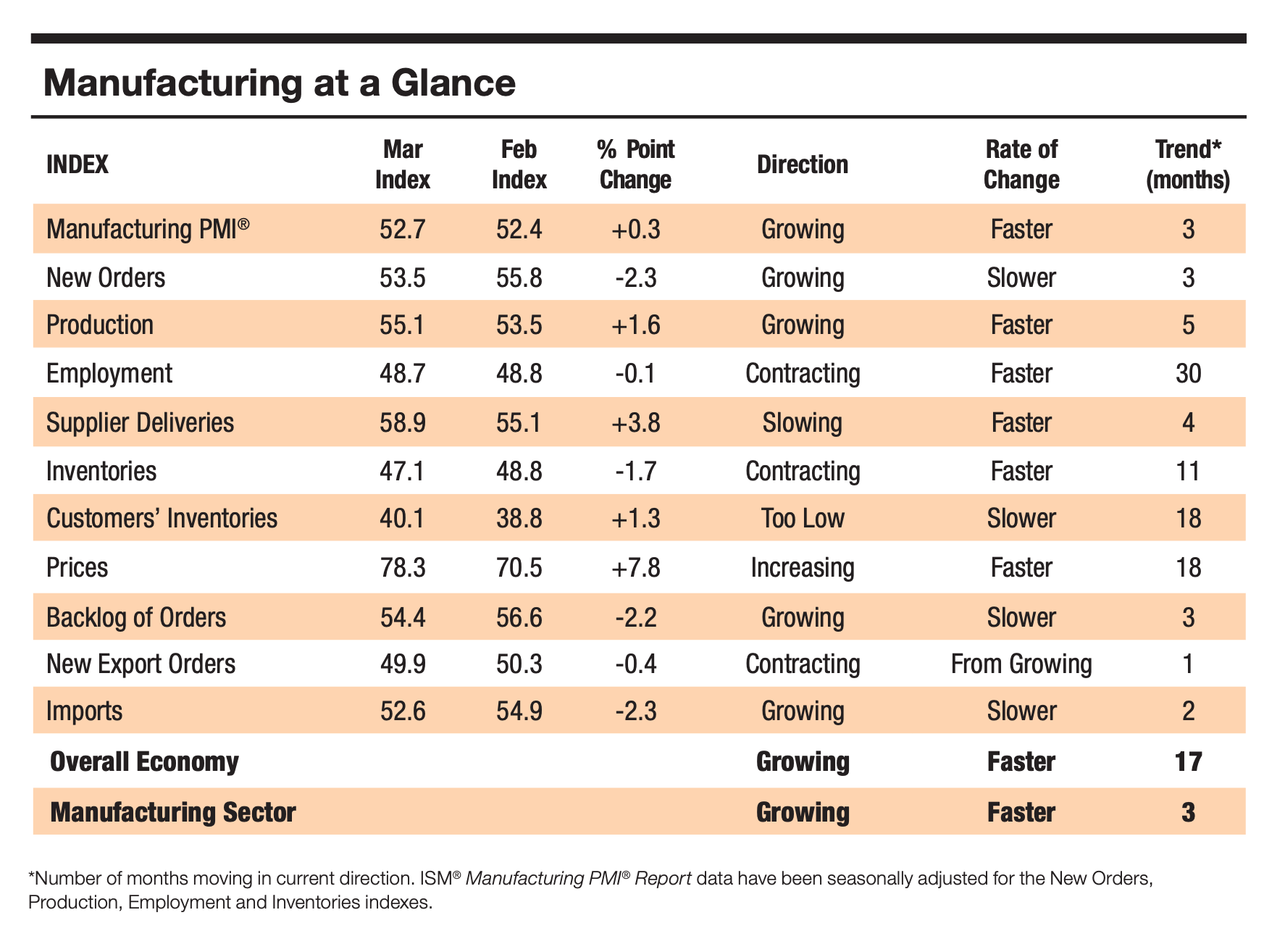
At the same time, the Prices component in manufacturing remains firm enough to suggest that the improvement in activity is not occurring in a fully disinflationary setting.
Taken together, these observations do not point to an obvious crisis regime. However, they also do not support a clean and immediate transition toward a low-volatility easing environment.
Interpretation
On current evidence, the data appear more consistent with a macro regime characterized by:
incomplete underlying disinflation,
elevated rates volatility,
real yields that remain meaningfully restrictive,
and cyclical resilience sufficient to delay a straightforward growth-scare narrative.
This distinction matters.
If inflation were clearly collapsing and activity were rolling over decisively, the market could more easily converge toward a lower-yield, lower-volatility equilibrium. By contrast, if activity remains resilient while inflation persistence remains visible, the rates market may continue to struggle to settle on a stable pricing regime.
At this stage, the available evidence appears more consistent with the latter case.
Provisional macro implication
The current configuration appears more compatible with a restrictive but not yet systemic environment than with either of the following:
a clean disinflationary easing regime, or
a full-scale financial stress regime.
That implies a backdrop in which macro and market outcomes may remain highly conditional on incoming data, particularly with respect to:
underlying inflation,
rates volatility,
and the extent to which cyclical resilience persists across services and labor-market data.
In practical terms, this suggests that the recent macro regime is still better described by elevated sensitivity to data and financial conditions than by a stable easing cycle.
What would strengthen this interpretation
This reading would gain support if upcoming data continue to show some combination of:
persistent Core CPI,
elevated or renewed rates volatility,
activity that remains positive but uneven,
and no decisive deterioration in broader financial conditions.
That combination would reinforce the view that the system remains restrictive and unstable at the margin, rather than clearly transitioning into a benign easing regime.
What would weaken this interpretation
This reading would be weakened if incoming data begin to show a more convincing combination of:
moderating core inflation,
materially lower Treasury volatility,
and clearer cyclical softening in activity without renewed inflation pressure.
Such a shift would be more consistent with a cleaner disinflationary path and a more stable rates backdrop.
Provisional conclusion
Based on the data reviewed so far, the macro environment appears to remain constrained, uneven, and sensitive, rather than broken or fully normalized.
The available evidence does not currently justify a high-confidence conclusion that the system is entering a severe crisis regime. Equally, it does not yet justify the view that inflation has been fully contained or that financial conditions are easing in a clean and durable way.
The most defensible interpretation, at this stage, is that the market continues to operate in a regime of incomplete disinflation, elevated sensitivity in rates, and selective cyclical resilience.
Disclaimer
This material is provided solely for informational, educational, and macroeconomic analysis purposes. It reflects a provisional interpretation of publicly available data as of the date of publication and does not constitute investment advice, a personal recommendation, an offer, or a solicitation to buy or sell any financial instrument or to adopt any investment strategy.
The views expressed are subject to change without notice as new information, data revisions, or market developments emerge. No representation or warranty, express or implied, is made as to the accuracy, completeness, or reliability of the information contained herein. Any market, economic, or asset-class interpretation included in this note should be understood as general macro commentary, not as a forecast, guarantee, or individualized recommendation.
Any investment or risk-management decision should be based on the reader’s own independent analysis, objectives, constraints, and risk tolerance, and, where appropriate, consultation with duly authorized professional advisers. This note is an independent macroeconomic interpretation and is not a formal research publication issued by a regulated financial institution.